
TRE™ Exercises Overview
Download a free visual guide to the TRE™ exercises
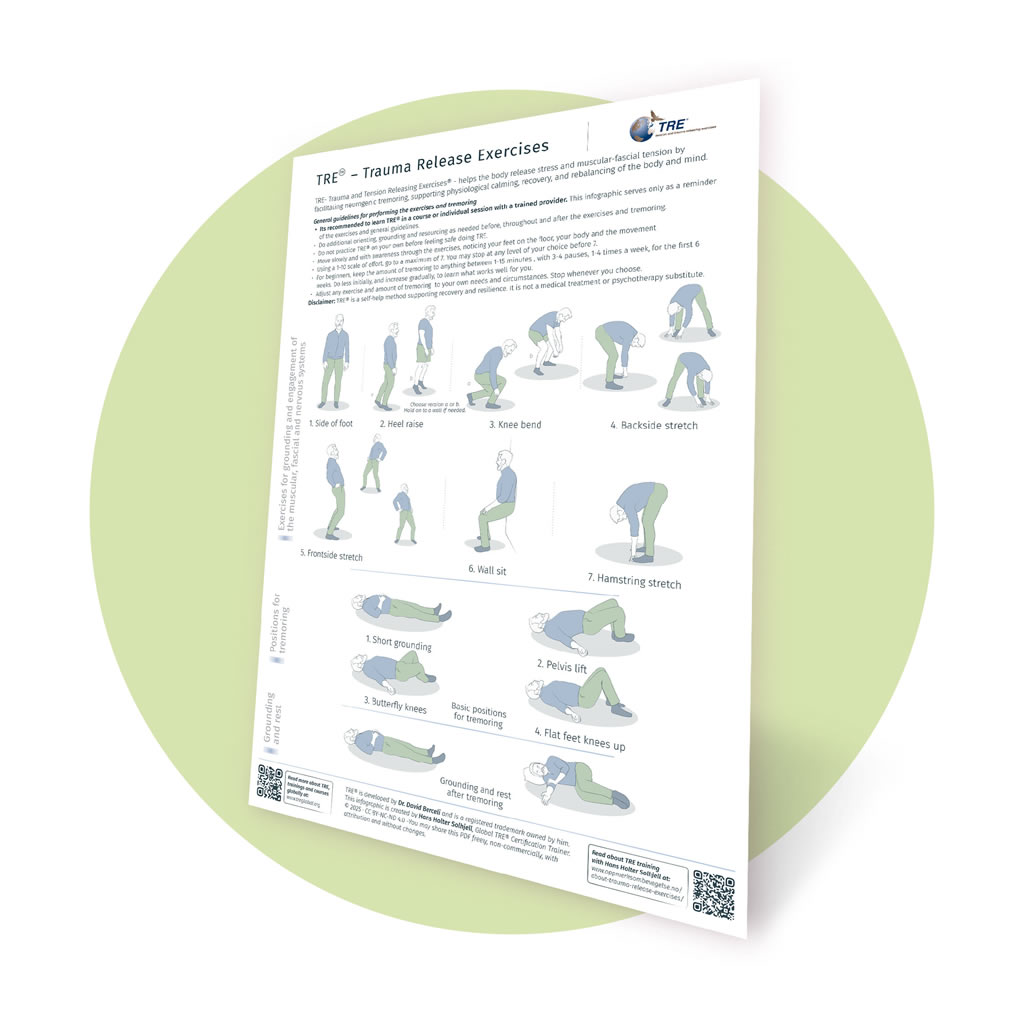
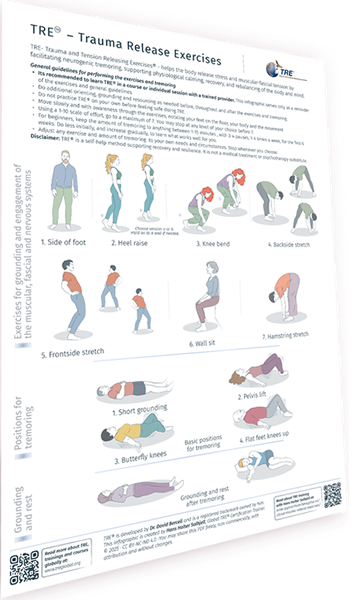
Get your free TRE™ exercises overview!
Add your email to the box below, and we will send you the PDF right away.
TRE™ (Tension & Trauma Releasing Exercises™) is a body-based self-help method developed by Dr. David Berceli that uses neurogenic tremors to reduce stress and muscular tension by releasing accumulated nervous system activation. TRE promotes recovery, resilience, and nervous system regulation.
Many people are introduced to TRE during a workshop, course, or individual session. Afterward, it can be helpful to have a simple visual reminder of the exercises and the basic structure of a TRE session.
This free visual overview provides a reminder of the basic aspects of TRE:
- The importance of grounding and resourcing
- The seven basic standing TRE exercises
- Basic positions used for neurogenic tremoring
- Grounding and rest positions after tremoring
- General practice guidelines and safety recommendations
- A brief overview of the TRE process from preparation to integration
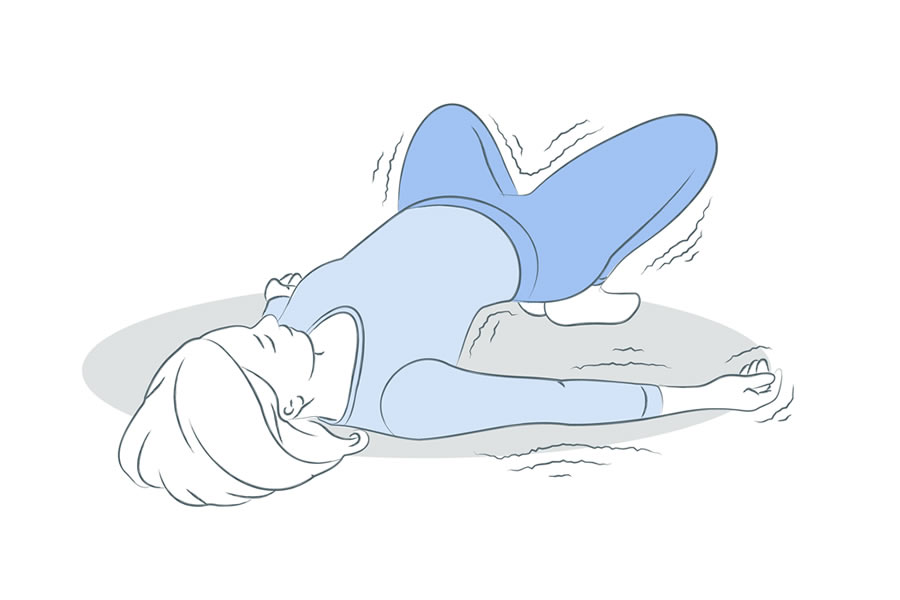
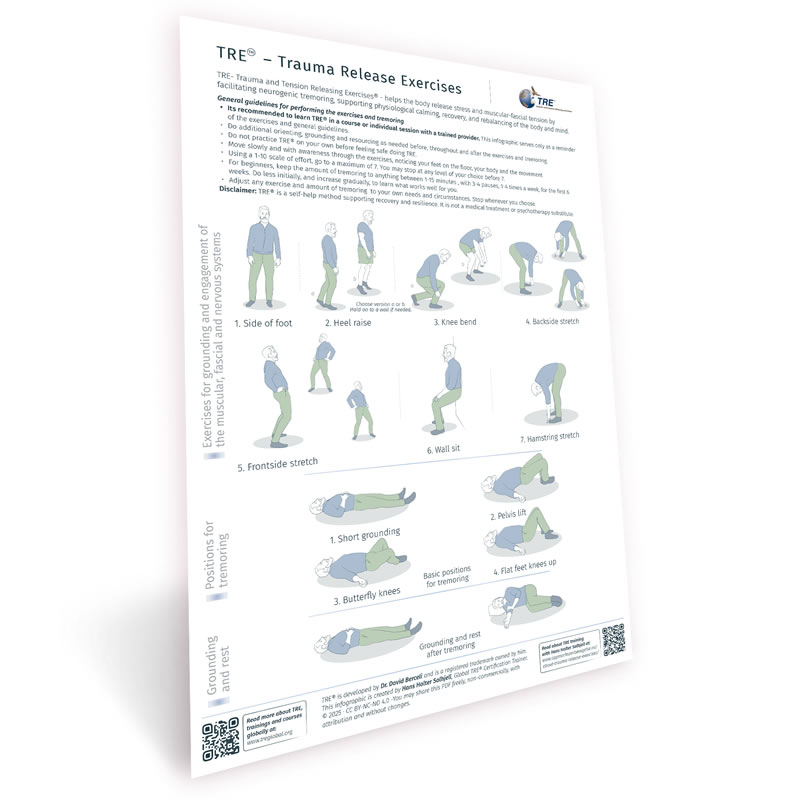
The guide is intended as a practical reminder for people who have already learned TRE with a certified provider, and as an introduction for those who would like a basic overview of the method before learning it in a course or an individual session.
The TRE Exercises Visual Guide is intended as a practical reminder for people who have already learned TRE with a certified provider, and as an introduction for those who would like a basic overview of the method before learning it in a course or an individual session.
Creator of this poster:
Hans Holter Solhjell
TRE™ Global Certification Trainer, Conflict Resolution Trainer, Somatic Experiencing and Feldenkrais Method Practitioner
One of my professional interests and special skills is the creation of practice oriented visual guides and shared mental models. The poster with the TRE exercises on this page is one example. Other and more original examples are my development of the PLS Framework and The Response Funnel Model. I invite you to explore the articles on this website and download my models.

Learn and practice TRE with a certified provider
TRE is best learned in individual sessions or in a course led by a trained, certified TRE provider. While the exercises themselves are relatively simple, the process of releasing physiological and emotional activation benefits from a safe, gradual, and manageable approach that can be adapted to each individual.
To prevent dysregulation and overwhelm, it is recommended to initially learn TRE with a certified provider. There is also a lot more to learn about the exercises and the process of release, and about adapting the process to your particular situation and body, that can not be captured in a short description or video, or in a single session.
When learned and experienced as safe, TRE can be practiced at home as an activation-release, self-regulation, and resilience-building practice.
Uses of TRE™ and Who is it for?
TRE is practiced by people from many different walks of life. Some come because they are experiencing stress, anxiety, burnout, trauma symptoms, chronic tension, sleep difficulties, or other life challenges. Others are simply curious about personal growth, body awareness, performance, recovery, and nervous system regulation.
Participants often include therapists, psychologists, coaches, health professionals, social workers, educators, yoga teachers, bodyworkers, military personnel, first responders, athletes, performers, business professionals, students, and people seeking greater well-being, resilience, and connection with themselves.

Integrative Approaches
Many therapists, health professionals, coaches, educators, and body-oriented practitioners combine TRE™ with other approaches and disciplines. Depending on the context, TRE™ may complement psychotherapy, trauma therapy, body-oriented therapies, movement practices, mindfulness, coaching, and relational work.
In my own work, I often combine TRE® with body-oriented trauma therapy approaches such as Somatic Experiencing® (SE), somatic education methods such as the Feldenkrais Method®, relational work, communication and conflict resolution, and my own PLS framework approach. These approaches can complement one another and support different aspects of recovery, self-awareness, learning, resilience, and personal growth.
Experiences with and Research on TRE
Over the past two decades, TRE® has been practiced by people in many different countries and settings, including community programs, educational settings, healthcare environments, humanitarian projects, and private practice. Many participants report benefits such as reduced stress and tension, improved sleep, greater emotional balance, increased body awareness, and enhanced resilience.
Alongside these practical experiences, a growing body of research has begun to examine the effects of TRE®. Studies have reported positive results related to trauma symptoms, stress, physical pain and discomfort, sleep, well-being, and self-regulation in a variety of populations. While the research base is still developing, the findings to date are promising and broadly consistent with the experiences reported by many participants.
You can read more about TRE research in this article and on the TRE For All research page. You can also read interviews with participants from my TRE® Global Certification Training and learn about their experiences with the method and my training.
Get your free TRE™ exercises overview!
Add your email to the box below, and we will send you the PDF right away.
